
Basic fridge and freezer repair training course in Durban
Basic fridge and freezer repair training course
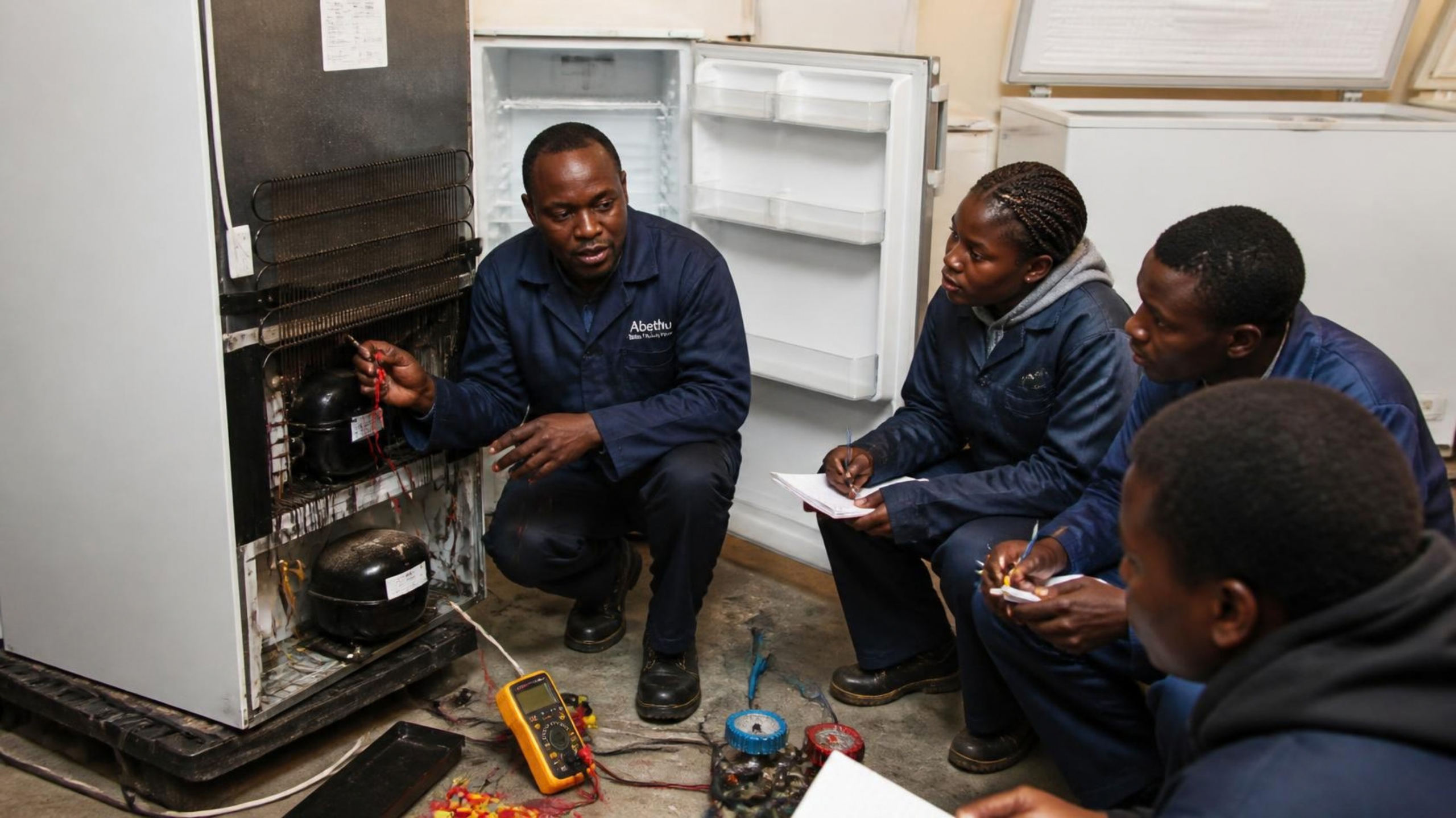
Details of our fridge and freezer training course and Kwazulu Natal as a whole.
Unit Standard 119066
Duration: 5 days
Level NQF Level 02 Learning assumed to be in place:
- ABET Level 4 or NQF Level 1 English literacy and numeracy.
Enroll fridge and freezer training course in Durban
Requirements of the fridge and freezer repair training course in Durban
- ID copy,
- Pen & Book,
- Medical report,
- Gloves,
:
- Eye Glasses,
- Overalls,
- Safety boots,
- Masks & Ear pads
About fridge and freezer repair course?
The Basic Fridge and Freezer Training Course provides learners with essential knowledge and practical skills in refrigeration, including how refrigerators and freezers operate, refrigeration cycles, identification and functions of major components such as compressors, condensers, evaporators, capillary tubes, thermostats, fans and electrical controls.
The course covers safe use of tools and equipment, basic electrical testing, installation, preventive maintenance, fault finding and diagnosis, common repairs, temperature control, defrost systems, leak detection and basic refrigerant-system servicing.
Strong emphasis is placed on electrical, refrigeration and workshop safety, correct use of PPE, and professional customer service. Learners are assessed through theory and practical exercises and, on successful completion, should be able to safely perform basic maintenance, identify common faults, carry out basic troubleshooting and understand when specialised or licensed refrigeration work is required.
A fridge and freezer repair’s job description
A fridge and freezer repair technician is responsible for inspecting, maintaining, diagnosing, and repairing refrigerators and freezers to ensure they operate safely and efficiently. The job involves identifying problems such as poor cooling, excessive ice formation, unusual noises, water leaks, electrical faults, compressor failure, faulty thermostats, damaged door seals, and fan or defrost-system problems.
The technician begins by listening to the customer’s description of the problem and conducting a thorough inspection of the appliance. They use appropriate tools and testing equipment to check electrical components, temperature controls, compressors, fans, wiring, and other refrigeration components. Based on the diagnosis, the technician determines whether a component needs adjustment, repair, cleaning, or replacement.
Fridge and freezer repair also involves routine maintenance, such as cleaning condenser coils, checking door seals, inspecting drainage systems, testing temperature performance, and ensuring proper ventilation. Where legally permitted and appropriately trained, technicians may also perform refrigeration-system servicing such as leak detection, refrigerant recovery, evacuation, and charging using the correct equipment and safety procedures.
Safety is an important part of the job because technicians work with electricity, refrigerants, moving components, and specialised tools. A professional technician must follow electrical and refrigeration safety procedures, use appropriate personal protective equipment, maintain accurate service records, explain the problem and repair to customers, and test the appliance after completing the work to confirm that it is operating correctly.
Why is a fridge and freezer repair important ?
Fridge and freezer repair is important because properly functioning refrigeration appliances help keep food fresh, safe, and protected from spoilage. Regular maintenance and timely repairs can prevent small problems from becoming expensive breakdowns, improve energy efficiency, extend the lifespan of the appliance, and ensure consistent cooling and freezing performance. Professional repair also helps identify electrical and mechanical faults that could create safety risks, while reducing unnecessary food waste and the cost of replacing appliances prematurely.